
How to Choose the Right Landscape Design for Your Home
Your landscape is more than just the space surrounding your home. It's an extension of your living area, a reflection of your personal style, and a significant investment in your property's value and your quality of life. Yet many homeowners struggle with a fundamental question when embarking on landscape projects: How do you choose a design approach that truly fits your home, your lifestyle, and your vision?
The answer isn't found in following the latest trends or copying your neighbor's garden. Instead, it lies in understanding the unique relationship between your home's architecture, your functional needs, your aesthetic preferences, and the environmental realities of your location. In Pasadena and surrounding communities, where architectural diversity ranges from historic Craftsman bungalows to Spanish Colonial estates to contemporary masterpieces, this question becomes even more nuanced.

As landscape design professionals who've worked with hundreds of Pasadena homeowners, we've developed a comprehensive approach to matching landscape design with individual properties and owners. The process involves thoughtful consideration of architectural style, practical lifestyle needs, environmental sustainability, and long-term maintenance expectations.
Understanding Your Home's Architectural Language
The most successful landscapes speak the same visual language as the architecture they surround. This doesn't mean slavishly matching every detail, but rather creating harmony between built structures and outdoor spaces through complementary materials, proportions, and design philosophy.
Craftsman and Bungalow Styles

Pasadena's abundant Craftsman homes, built primarily between 1905 and 1930, embody Arts and Crafts principles of natural materials, honest construction, and integration with nature. These homes call for landscape design that feels organic and unpretentious.
Appropriate landscape elements include naturalistic plantings that appear casually arranged rather than rigidly formal, native and regionally appropriate plants reflecting the Arts and Crafts connection to place, handcrafted wooden features like pergolas and arbors, river rock and local stone for pathways and edging, and functional gardens incorporating vegetables and herbs alongside ornamentals.
For contemporary adaptations, replace water-intensive lawns with decomposed granite accented by native grasses. Use California natives like Western Redbud and Toyon that honor Craftsman philosophy while thriving in our climate. Incorporate generous hardscape using natural flagstone to create fire-resistant zones while preserving cottage garden aesthetics through carefully spaced plantings.
Spanish Colonial Revival and Mediterranean

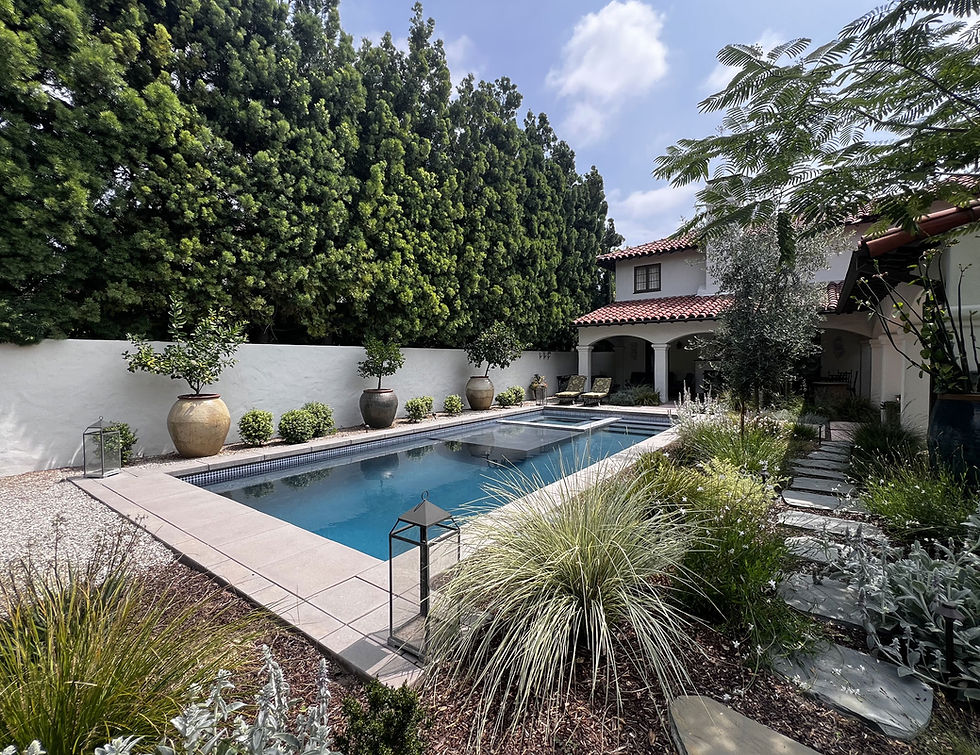
Spanish Colonial Revival architecture demands landscapes that evoke Mediterranean tradition while addressing contemporary environmental realities. Key design characteristics include formal structure with axial planning and clear geometry, generous hardscape featuring tile work and fountains, drought-tolerant Mediterranean plants like lavender and olive trees, architectural specimens such as agaves and palms, and clearly defined outdoor rooms created by walls and columns.
These traditional elements align remarkably well with modern sustainable practices. Generous hardscape is both traditional and fire-safe. Succulent gardens fit the aesthetic while providing excellent fire resistance. Formal structure naturally creates the spatial definition that supports defensible space requirements.
Mid-Century Modern and Contemporary

Mid-Century Modern homes emphasize clean lines, indoor-outdoor flow, and material honesty. These properties benefit from landscape design reflecting modernist principles, including minimalist plantings featuring architectural specimens, strong horizontal lines echoing building design, sculptural plants like Agave and Yucca, geometric hardscape with clean edges, and emphasis on texture and form over color masses.
Contemporary and transitional styles offer maximum flexibility, allowing mixed materials, varied plant palettes, integration of sustainable systems, and generous outdoor living spaces. Material freedom allows choosing the most fire-resistant and drought-tolerant options without style constraints.
Assessing Your Lifestyle and Functional Needs
Beyond architectural considerations, successful landscape design must address how you actually use outdoor spaces. A garden that looks beautiful but doesn't support your lifestyle becomes a source of frustration rather than enjoyment.
Entertainment and Gathering

If you regularly host outdoor gatherings, your landscape needs generous hardscape areas for dining and socializing, outdoor kitchen facilities or prep spaces, comfortable seating zones with weather protection, ambient lighting for evening events, and perhaps fire features for year-round comfort.
Consider how many guests you typically entertain. A family that hosts occasional small dinners needs different spaces than one that throws large parties. Design accordingly, creating appropriately scaled areas that feel neither cramped nor empty during typical use.
Family Activities and Relaxation
Families with children require durable surfaces that withstand active play, open areas for games and activities, visible sightlines for supervision, and safe plant selections avoiding thorns and toxic species. Design with flexibility in mind, creating spaces that can transition as family needs change over time.
Many homeowners prioritize outdoor spaces for personal relaxation through secluded seating areas with privacy screening, water features providing ambient sound, fragrant plantings engaging the senses, and meditation spaces with level surfaces. These retreat spaces often work best when partially separated from more active areas.
Gardening Interests
Passionate gardeners need landscape designs supporting their interests through dedicated planting beds with quality soil and drainage, appropriate sun exposure for vegetables and herbs, convenient water access, and perhaps greenhouse or potting shed spaces. Productive gardens can be beautifully designed, integrating edibles into ornamental landscapes through attractive raised beds and espalier fruit trees.
Environmental Considerations and Sustainability in Landscape Design
Contemporary landscape design in Southern California must address environmental realities, including water scarcity, fire risk, and climate change. The most successful projects integrate sustainability from the beginning rather than treating it as an afterthought.
Water-Wise Design

California's ongoing water challenges make drought-tolerant landscape design essential. Key strategies include eliminating or drastically reducing turf grass in favor of hardscape or drought-tolerant ground covers, selecting California native and Mediterranean plants adapted to our climate, implementing efficient irrigation with drip systems and smart controllers, and grouping plants with similar water needs together.
Water-wise landscapes typically reduce outdoor water consumption by 50 to 70 percent compared to traditional designs while providing equally lush, attractive results. The key lies in plant selection and design skill, not in accepting barren or unattractive spaces.
Fire-Resistant Planning
For properties in Pasadena's foothill areas or adjacent to open space, fire-resistant landscape design is critical. Fire-resistant strategies include maintaining defensible space zones around structures, selecting plants with high moisture content and low volatile oils, emphasizing hardscape in areas closest to buildings, spacing plants to prevent fire spread, and choosing non-combustible materials for structures and mulches near homes.
Recent fires, including the devastating 2025 Eaton Fire in Altadena, demonstrate that even areas not traditionally considered high-risk can face catastrophic wildfire. Incorporating fire-resistant principles benefits all properties.
Supporting Local Ecology
Well-designed landscapes can support local wildlife by using California native plants to provide food and habitat, pollinator gardens to attract beneficial insects, eliminating pesticides and synthetic fertilizers, and providing water sources for birds and insects. These ecological benefits create gardens that feel alive and dynamic, with seasonal changes and wildlife activity.
Maintenance Expectations and Long-Term Care
Perhaps the most overlooked consideration in landscape design is realistic assessment of maintenance commitment. A garden requiring more care than owners can or will provide inevitably deteriorates, regardless of initial design quality.
High-Maintenance Versus Low-Maintenance
Some design approaches demand significant ongoing care, including formal hedges requiring frequent shaping, annual color beds needing seasonal replanting, and extensive lawns demanding mowing and feeding. These landscapes can be spectacular when properly maintained, but become eyesores when neglected.
Many homeowners prefer landscapes requiring minimal ongoing care through generous hardscape, reducing planted areas, drought-tolerant plants needing little water once established, mulched planting beds suppressing weeds, and automated irrigation systems. Low-maintenance doesn't mean no maintenance, but well-designed sustainable gardens might require just a few hours monthly rather than weekly commitments.
Be honest about your interest in hands-on gardening and available time before committing to designs requiring extensive care.
Budget Considerations and Investment
Landscape design projects range from modest refreshes to comprehensive transformations. As a general guideline, landscape investment typically ranges from 10 to 20 percent of home value for comprehensive projects. This investment delivers substantial returns through increased property value, enhanced livability, reduced maintenance costs with proper design, and personal enjoyment.
Strategic phasing allows spreading costs over time while ensuring cohesive final results. Typical phasing might include initial design and master planning, hardscape and infrastructure in phase one, major plantings and irrigation in phase two, and refinements in subsequent phases.
Professional installation becomes essential for hardscape requiring proper base preparation, irrigation systems needing correct design, grading and drainage solutions, and landscape lighting with electrical requirements. Be realistic about your skills when deciding what to tackle personally versus hiring professionals.
The Sacred Space Design Process
At Sacred Space Garden Design, we begin every project with extensive discovery, understanding your lifestyle, aesthetic preferences, maintenance expectations, and budget parameters. Comprehensive site analysis examines topography, drainage, solar exposure, existing vegetation, soil conditions, and fire risk factors.
We develop conceptual landscape plans establishing overall spatial organization, proposing hardscape framework and outdoor rooms, and suggesting plant palettes and design themes. Approved concepts are refined into detailed construction documents specifying exact plant species, hardscape materials, irrigation systems, and lighting layouts.
Our comprehensive installation services include expert hardscape installation, quality plant material sourcing, irrigation system installation, and landscape lighting. Single-source responsibility from design through installation ensures quality control and eliminates coordination problems.
Making the Right Choice for Your Home
Choosing the right landscape design for your home isn't about following trends. It's about creating outdoor spaces that honor your home's architecture, support your lifestyle, reflect your personal aesthetic, address environmental realities, and fit your maintenance capabilities and budget.
The investment in professional landscape design creates outdoor sanctuaries that enhance daily life, provide gathering spaces, support environmental sustainability, and increase property value while reducing long-term costs.
Ready to discover what's possible for your property? Schedule a design consultation with Sacred Space Garden Design to explore how professional landscape design can transform your outdoor spaces into personalized sanctuaries that enhance your home's architecture, support your lifestyle, and celebrate Pasadena's unique character.
Your perfect landscape is waiting to be designed.


Comments