
Designing Fire-Resistant Landscaping in Altadena and Pasadena
Updated: 3 days ago
What the New Zone 0 Rules Could Mean for the First Five Feet Around Your Home
Since the Eaton Fire, many homeowners in Altadena and Pasadena have been asking the same question. How do you feel safe at home again without losing the garden you love? For many families, the garden is where they find their calm at the end of the day, and that matters as much now as it ever did.
Much of the conversation about fire-resistant landscaping in Altadena and Pasadena now centers on Zone 0, the new state rules for the five feet closest to a house. Many people worry that following these rules means trading their garden for a strip of gravel. It does not have to. With thoughtful planning, the first five feet around your home can be safe, practical, and still beautiful. Here are some ideas to consider as you plan.

What Zone 0 Means for Your Home
Zone 0 is the area from the walls of your home out to five feet. It also includes the space around attached decks, fences, and other structures. Fire researchers have found that this is where homes are most vulnerable to embers. These are the small burning fragments that travel ahead of a wildfire and settle in dry leaves, mulch, and plants near the house.
The version approved by the state Board of Forestry in August divides this area into two parts.
The safety zone. This is the space right next to the house, and it would need to be free of plants. It extends at least one foot from the wall or to the edge of the eaves, whichever is greater. It widens to two feet near windows, glass doors, and vents, and to five feet around attached decks.
The outer band. This is the remaining space out to five feet. Low, non-woody plants up to 18 inches tall would be allowed here. Ground covers would be kept under three inches, and potted plants would sit in noncombustible containers.
Across the whole five feet, the rules also call for removing firewood, wood mulch, dead leaves, and fallen branches. These are the small things that most often catch an ember.

Zone 0 Requirements in California, Where Things Stand Today
The Board of Forestry approved its Zone 0 regulations in August 2026. In early September, the Board withdrew the package from final state review to make technical edits. Another public comment period is expected. This means the statewide rules are not in effect yet, and some details may still change.
We do know how the rules are expected to work once they take effect. New construction will need to comply from the start, which matters a great deal for families rebuilding in Very High Fire Hazard Severity Zones. Existing homes will have a phased period of several years to make changes. Local fire agencies may also set requirements of their own.
Even so, it makes sense to plan now rather than wait. If you are rebuilding or redesigning, it is far easier to plan for Zone 0 from the beginning than to remove a new garden later. Before any work begins, it is a good idea to confirm your fire hazard zone on the CAL FIRE map. You can also check current requirements with the Los Angeles County Fire Department or, in Pasadena, the Pasadena Fire Department.
Is your home in a fire hazard zone?
Look up your address on the CAL FIRE Fire Hazard Severity Zone map, then contact your local fire department for the latest Zone 0 guidance.
A Garden, Not a Gravel Moat
For many homeowners, the first instinct is to pour gravel around the house and call it finished. That may meet the intent of the rules, but it can make a home feel stark and unwelcoming. A better approach is to treat the safety zone as a design opportunity.

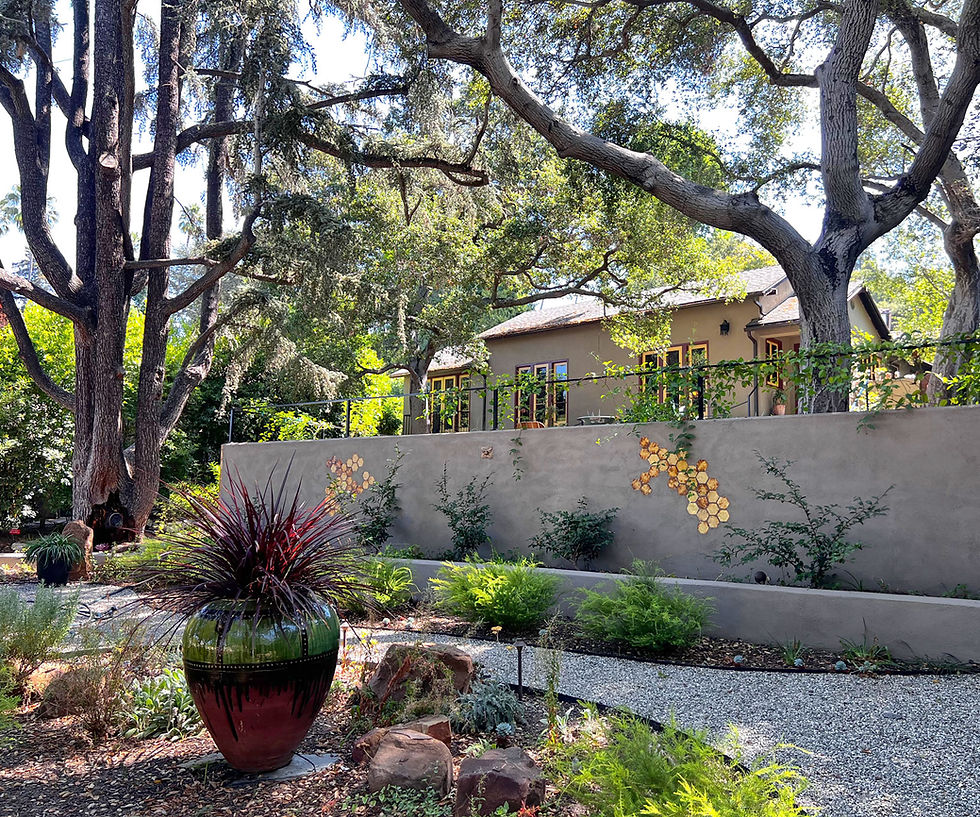
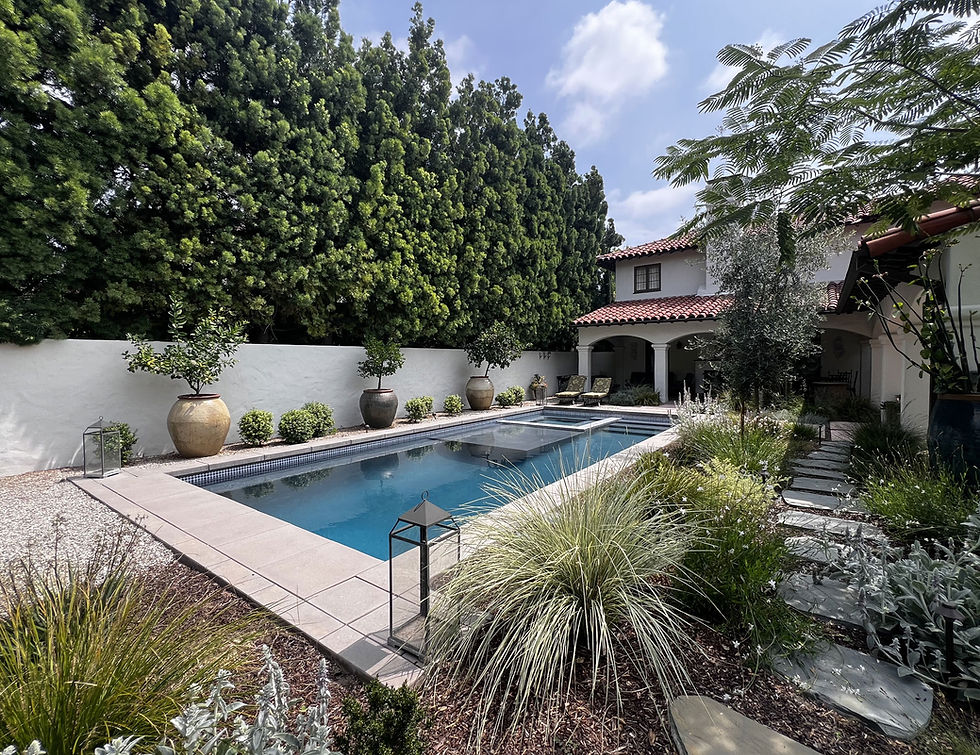
Hardscape can be one of the most useful tools here. Natural flagstone, decomposed granite, permeable pavers, and stone edging are all noncombustible, and each brings its own texture and color. Here are a few ideas to consider.
A band of flagstone set in decomposed granite can read as a path rather than a buffer.
A low stone seat wall a few feet from the house could frame a sitting area while keeping plants at a safe distance.
Decorative boulders can add weight and a sense of permanence.
A simple change in pattern, such as river rock bordered by cut stone, can give the eye a place to rest.
The aim is a foundation edge that feels intentional, as if it had always been part of the garden.
Ember-Resistant Plants for Southern California Gardens
Beyond the safety zone, there is still room for living plants. Low, non-woody plants that hold moisture are a good place to start. Placing them in small groupings with open space between them, and keeping them well tended, makes a real difference.
Plants worth considering for this outer band include the following:
California poppies, which bring spring color and stay low
Dudleya and other low native succulents, which store water in their leaves
Blue chalksticks (Senecio mandraliscae), a silvery succulent ground cover
Low-growing sedums, which knit into soft mats between stones
No plant is fireproof. Even ember-resistant plants need regular care. That includes removing dead leaves, trimming spent growth, and watering consistently through the dry months. A well-tended planting is far safer than a neglected one, whatever the species.

Why Irrigation Matters More Now
Water is one of the quiet partners in a fire-resistant garden. Healthy, well-hydrated plants are much harder to ignite than drought-stressed ones. Drip irrigation is worth considering because it delivers water directly to the roots of each plant. This can keep the outer band healthy without spraying walls or foundations.
Zone 0 also changes how to think about mulch. Wood chips and bark do not belong in the first five feet. Stone mulch or decomposed granite can take their place. Both help hold moisture in the soil and keep beds looking finished. Further from the house, organic mulch still has an important role in a water-wise garden.

Beyond the First Five Feet
Zone 0 is the newest piece of a larger picture. Defensible space landscaping in Los Angeles County already includes Zone 1, from five to 30 feet, and Zone 2, from 30 to 100 feet. In these areas the focus is on spacing between plants and trees and on clearing dead material. It also includes pruning lower branches so a ground fire cannot climb into the canopy.
This is where your garden can be at its fullest. Patios, play areas, shade trees, and generous plantings can all have a place here when they are spaced and cared for thoughtfully. One idea is to move gradually from open, mineral surfaces near the house to richer planting further out. That way the whole property feels connected rather than divided into zones.

Questions to Ask as You Plan Fire-Resistant Landscaping in Altadena
Every property is different, so a fire-resistant plan should begin with a close look at your own home. Here are some questions to consider.
How wide are your eaves, and where are your windows, vents, and doors?
Are there attached decks, fences, or gates that extend the five-foot zone?
Do any trees hang near the roofline?
How do you want to use your garden? Where do you sit in the morning, where do the children play, and what do you see from the kitchen window?
The answers to these questions can shape a garden that follows the Zone 0 guidelines and still feels personal and welcoming.

A Garden That Protects and Restores
A garden that helps protect your home also gives you peace of mind, and that feeling matters. When the spaces closest to your house have been planned with care, the rest of the garden can do what it does best. It can help you rest, gather, and restore.
If you are rebuilding or rethinking your landscape in Altadena, Pasadena, or La Cañada Flintridge, we would be glad to walk your property with you and talk through the possibilities. Contact Sacred Space Garden Design to schedule a consultation.


Comments